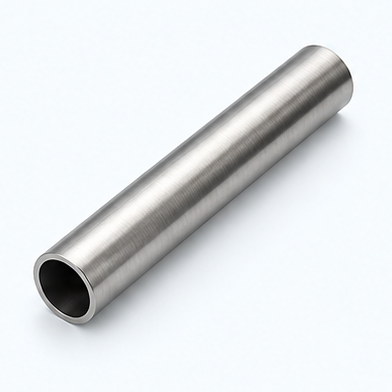
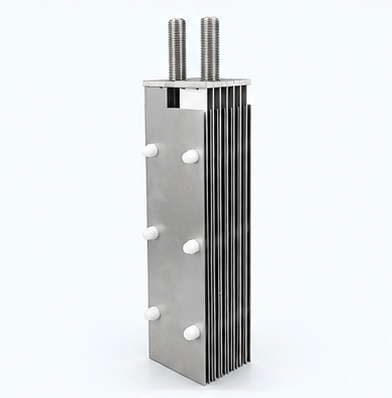
- Titanium Anode Electrolyzer Manufacturer & Water Electrolysis Hydrogen Solutions Supplier
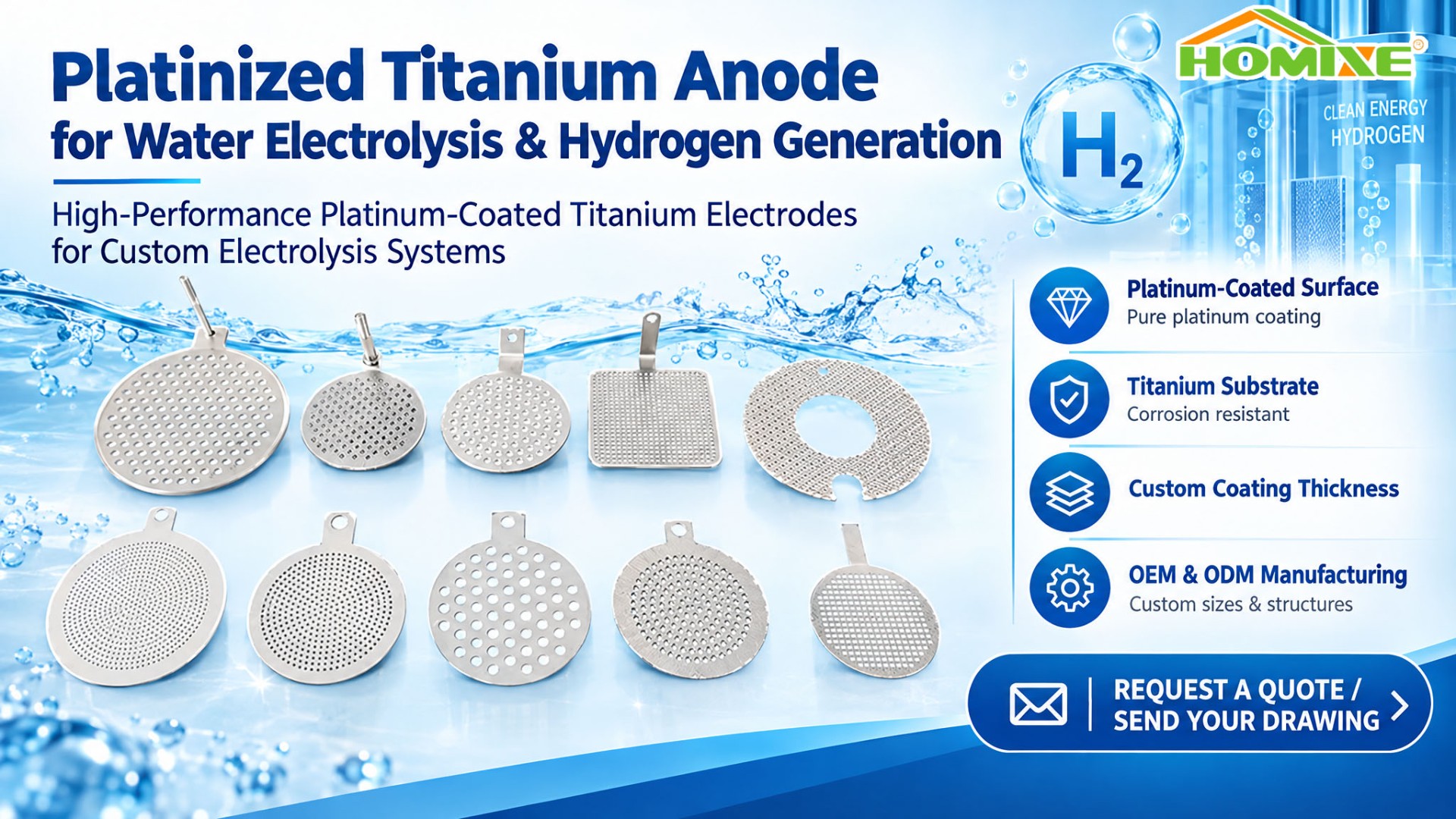
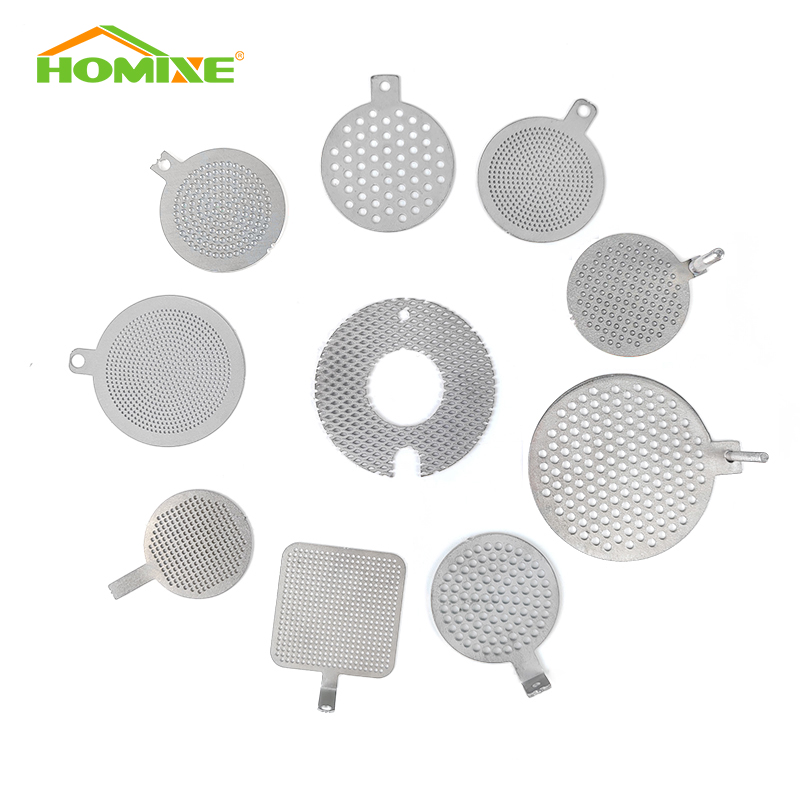
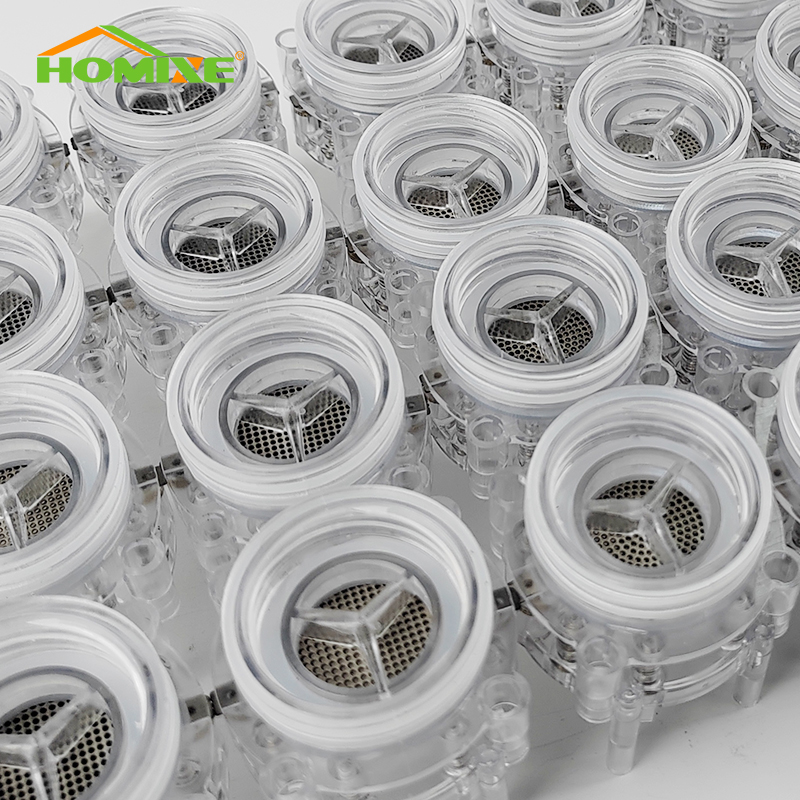
| Product Name | Platinum-Coated Titanium Anode | Brand Name | HOMIXE |
| Model Number | HM-PTA102 | Feature | Insoluble anode with excellent dimensional stability — stable electrode spacing and a steady working voltage. Low cell voltage for lower power consumption. High corrosion resistance, long service life, and no metal ion release into the treated water. |
| Grade | GR1 Titanium | Technique | Rolling, Cutting, Welding, Surface Pre-treatment, Platinum Electrodeposition |
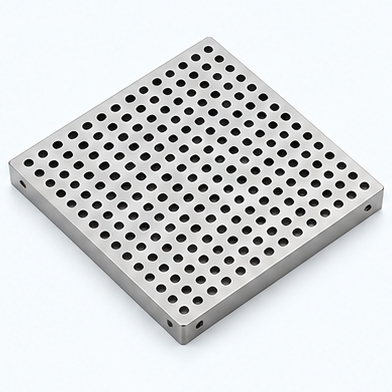
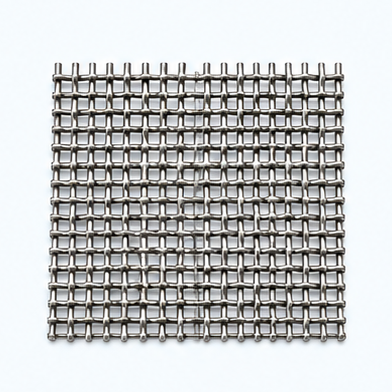
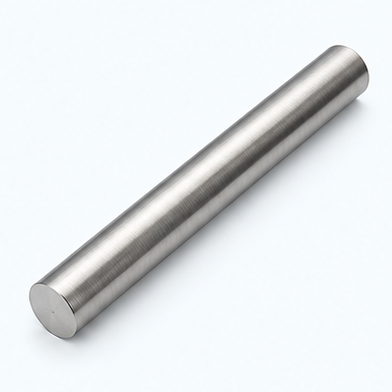
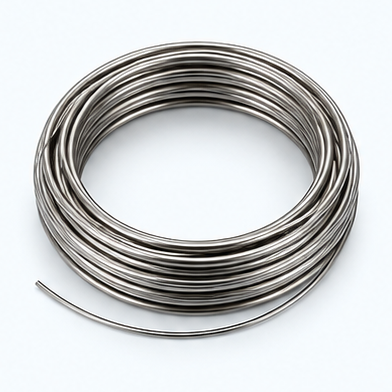
| Application | Hydrogen-rich water bottles & hydrogen water machines; SPE/PEM water electrolysis; Brown's Gas (HHO) generators; Alkaline & acidic water ionizers; Hypochlorous acid generators; Fruit & vegetable disinfection; Skin care & antioxidant water devices; Precision electroplating & laboratory electrochemical research | Dimension | Customized size — plate / mesh / rod / tube, made to drawing |
| Coating | Platinum (Pt) | Coating Thickness | 0.2–5 μm |
| Product Name | Platinum-Coated Titanium Anode | Brand Name | HOMIXE |
| Model Number | HM-PTA102 | Feature | Insoluble anode with excellent dimensional stability — stable electrode spacing and a steady working voltage. Low cell voltage for lower power consumption. High corrosion resistance, long service life, and no metal ion release into the treated water. |
| Grade | GR1 Titanium | Technique | Rolling, Cutting, Welding, Surface Pre-treatment, Platinum Electrodeposition |
| Application | Hydrogen-rich water bottles & hydrogen water machines; SPE/PEM water electrolysis; Brown's Gas (HHO) generators; Alkaline & acidic water ionizers; Hypochlorous acid generators; Fruit & vegetable disinfection; Skin care & antioxidant water devices; Precision electroplating & laboratory electrochemical research | Dimension | Customized size — plate / mesh / rod / tube, made to drawing |
| Coating | Platinum (Pt) | Coating Thickness | 0.2–5 μm |
Every HOMIXE platinized titanium anode is produced and inspected in-house, batch by batch. You receive the electrode — and the records behind it.
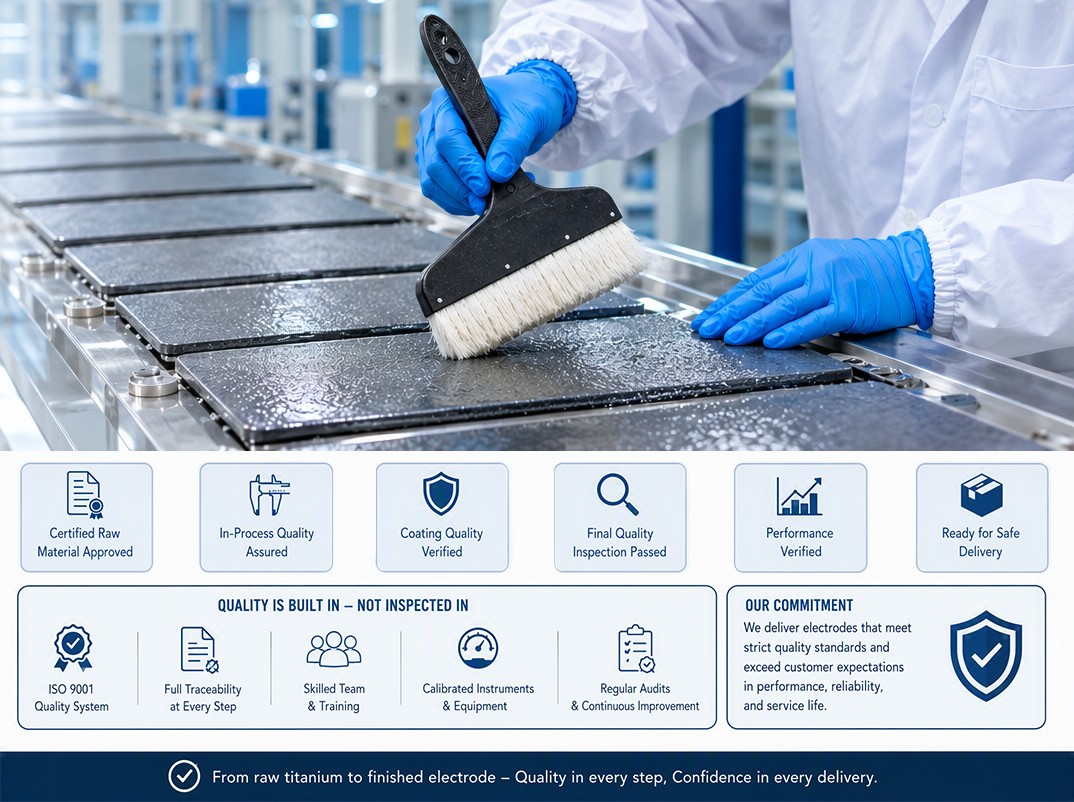
• Coating thickness test (XRF)
• Adhesion test (bending / thermal shock)
• Electrochemical performance test
• Accelerated life test on production samples
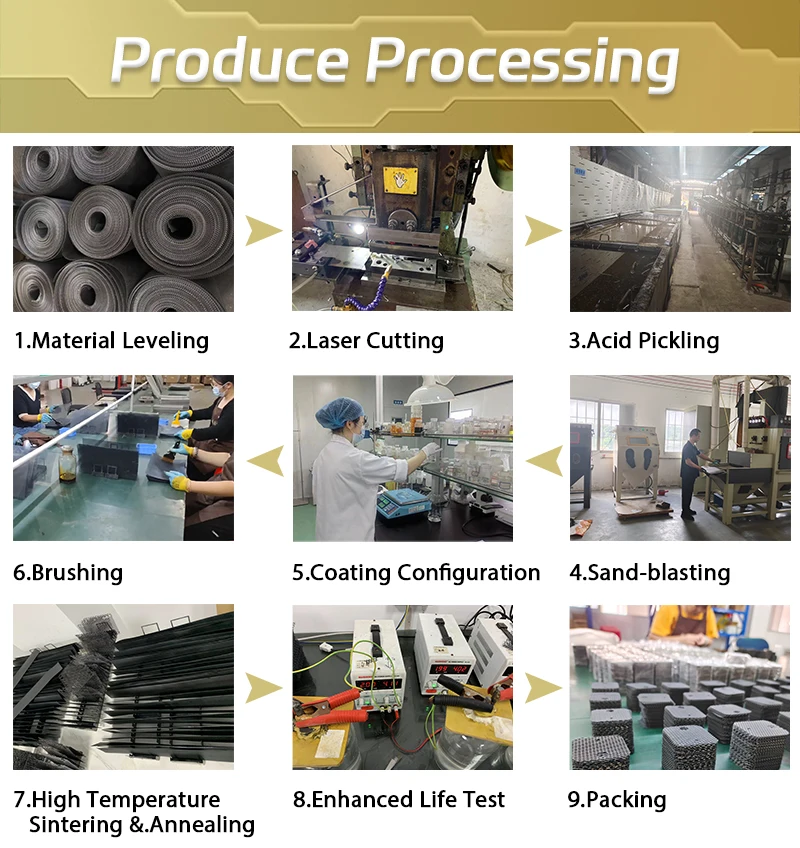
1. Titanium substrate inspection — incoming Gr1 / Gr2 titanium verified against ASTM B265 by material certificate and composition check.
2. Surface pretreatment — sand blasting and acid washing remove oxide scale and create the anchor profile the platinum layer needs for adhesion.
3. Platinum coating — controlled nano electro-plating deposits a dense, uniform platinum layer; thickness is set to your specification.
4. Coating thickness verification — X-ray fluorescence (XRF) measurement recorded for every batch.
5. Adhesion and surface inspection — visual and adhesion checks before packing.
6. Final inspection and packing — dimensions, terminals and appearance checked; electrodes protected for export.
• MTC (Material Test Certificate)
• Certificate of Compliance (CoC)
• XRF coating thickness report
• Batch traceability record
Certifications: ISO 9001:2015, RoHS, SGS.
Platinum-coated titanium is not the answer to every electrolysis problem. Here is an honest breakdown, so you can shortlist before you enquire.
We manufacture platinized, MMO and Ru-Ir anodes, so our recommendation is based on your duty cycle — not on what we happen to have in stock.
Send us your electrolyte, current density and running hours, and we will tell you honestly which coating belongs in your cell.
Every HOMIXE electrode can be built to your exact specification. Tell us the six points below and we will come back with a drawing confirmation and a quote — usually within 24 hours.
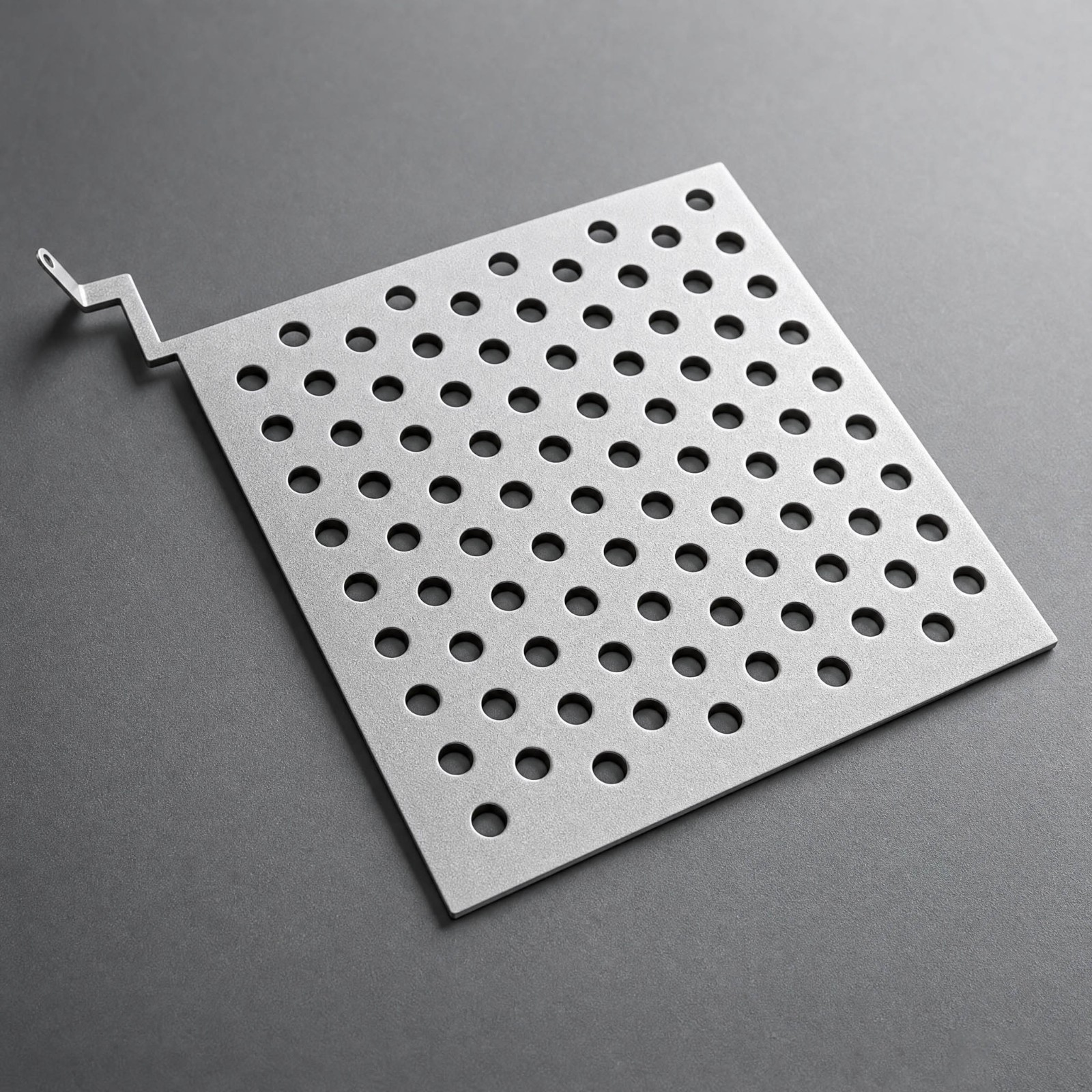
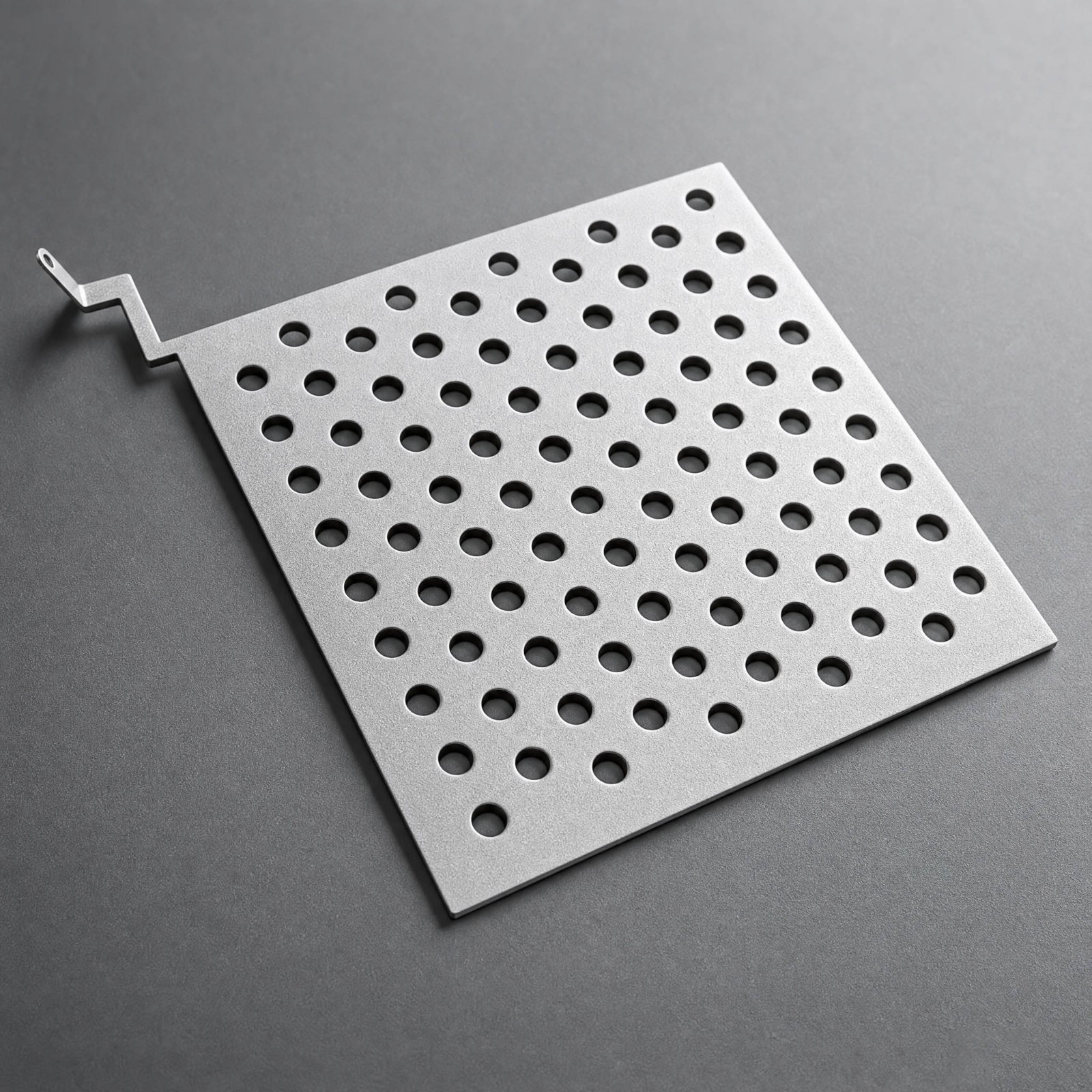
1. Application and electrolyte — what the electrode does, and what solution it runs in.
2. Current density and operating voltage — the electrical duty of your cell.
3. Shape and dimensions — length, width, thickness and active area.
4. Platinum coating thickness — or simply your target service life, and we will recommend one.
5. Connection — tab, hole, thread, busbar, wire, or your own design.
6. Service life and duty cycle — continuous or intermittent operation.
Drawing formats we accept: PDF, JPG, PNG, DWG, STEP, IGES, STL.
No drawing yet? Send a sample or a photo with dimensions — we will draft it for your approval.
OEM / ODM services:
• Custom size, shape and electrode structure
• Custom platinum coating thickness
• Recoating service for used platinum-coated anodes (subject to substrate condition)
• Custom logo (MOQ 100 sets)
• Custom packaging (MOQ 500 sets)
• Graphic customization (MOQ 500 sets)
From your drawing to your finished electrode — samples start at 1–10 pcs.
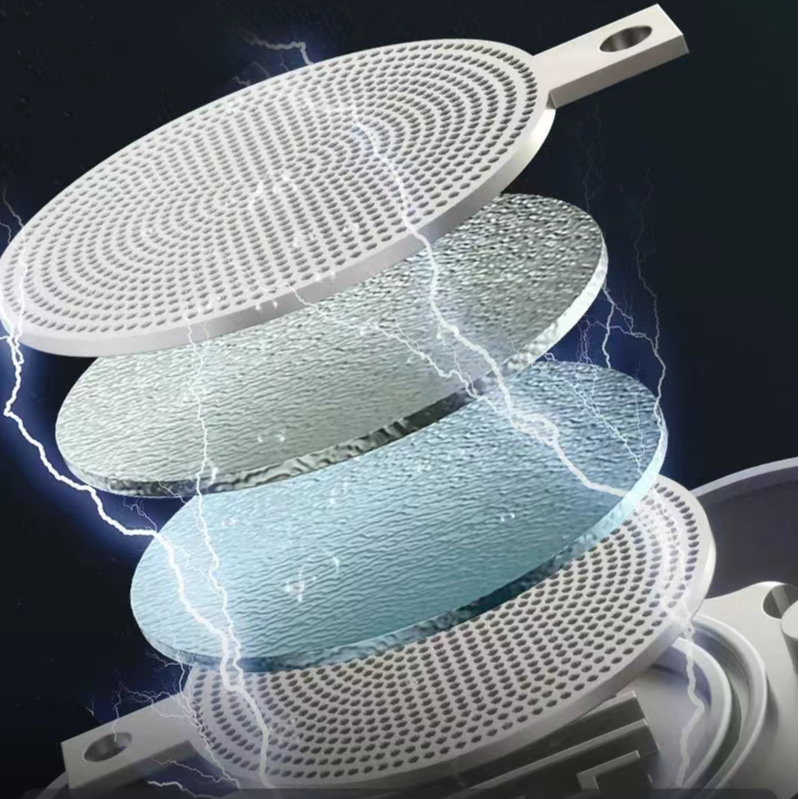
The perfect combination of platinum and titanium
Platinum Coating — Provides the active electrochemical surface
Titanium Substrate — Structural strength, corrosion resistance
Titanium Base — High-purity titanium (Gr 1 / Gr 2)
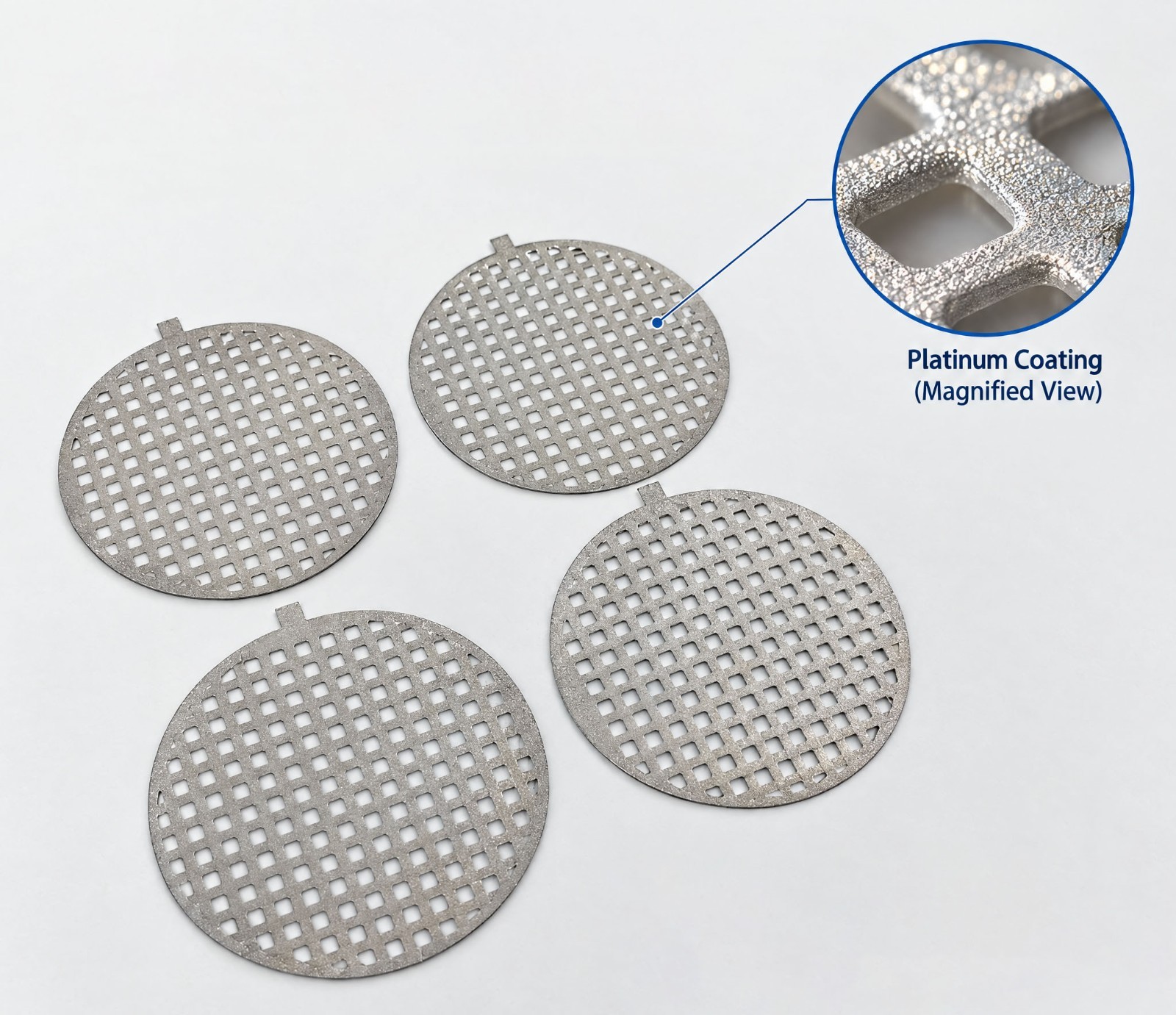
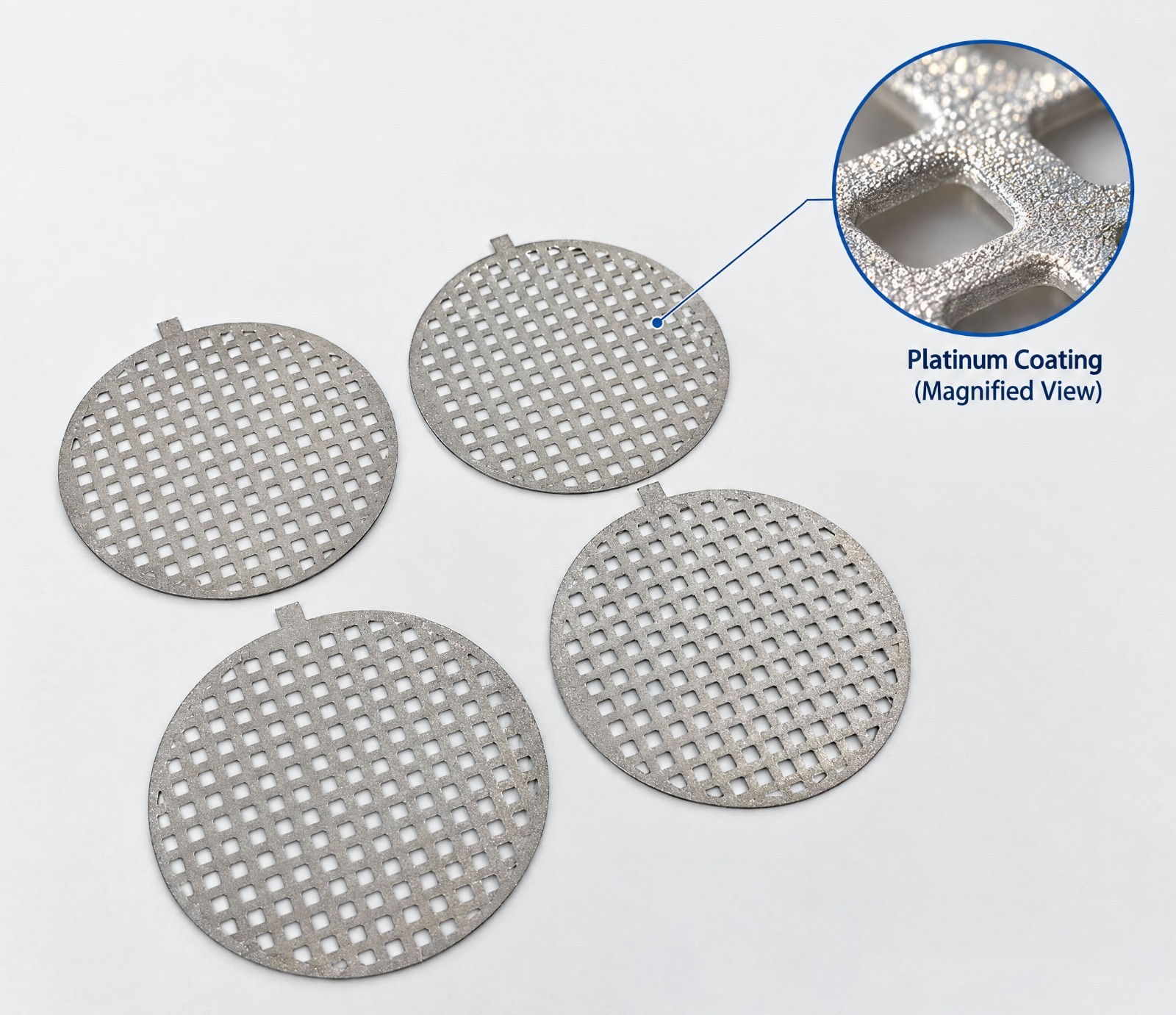
Flexible Design for Different Applications
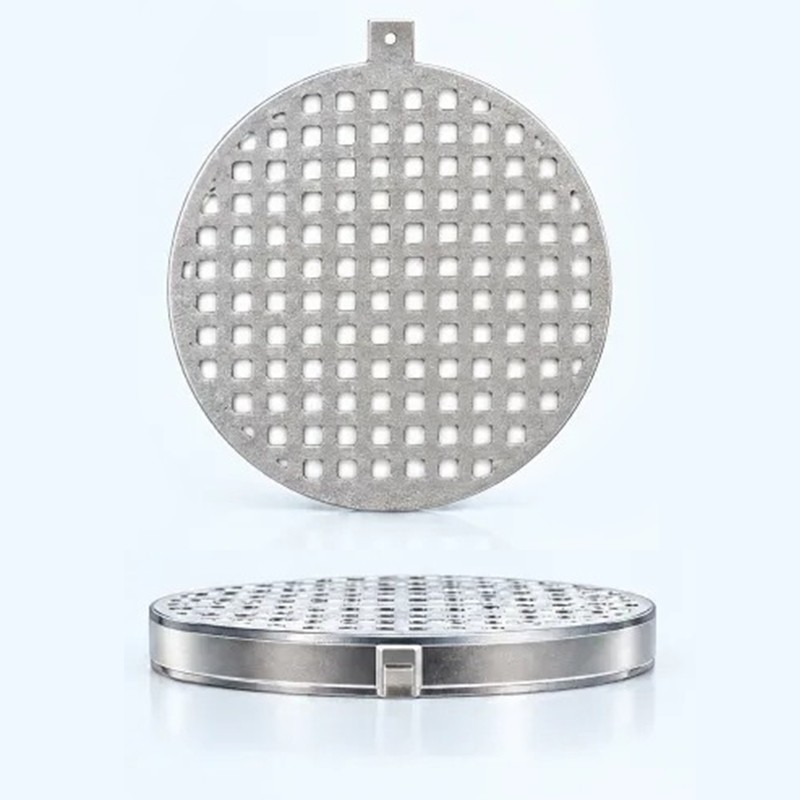
Cost-effective solution for general applications
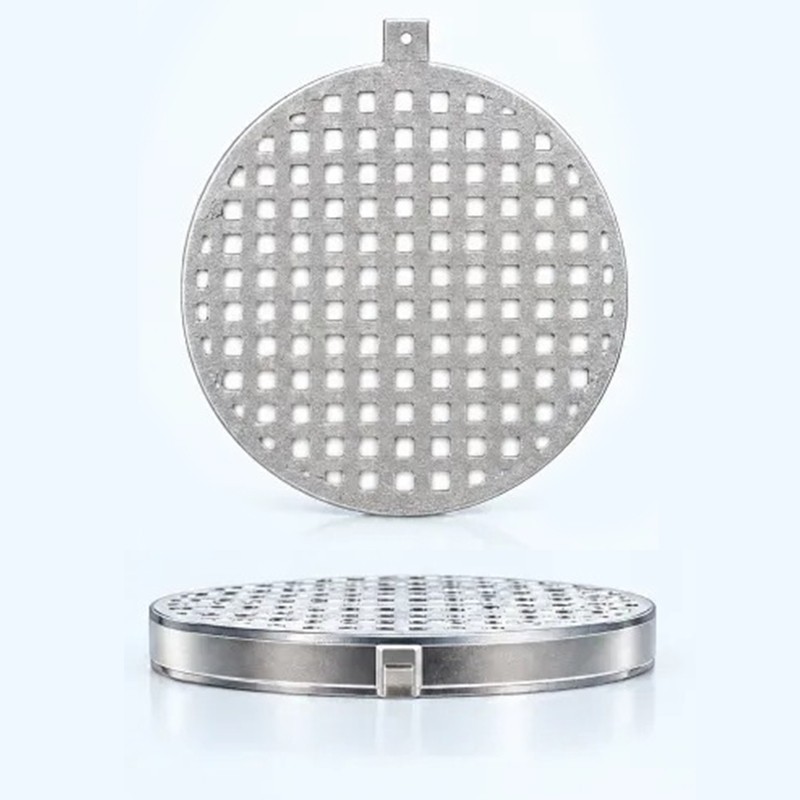
Higher active area for higher efficiency
Rule of thumb: for hydrogen water / ionizer electrolysis where electrolyte purity matters, Pt/Ti is the professional choice. For heavy chlorine generation, ask us about our MMO anodes — we supply both.
| Platinized Titanium (Pt/Ti) | MMO (Mixed Metal Oxide) | Solid Platinum | |
| Best For | Precious-metal plating, water ionizers, low-chlorine / clean electrolytes | Chlorine-evolving duty (seawater, pools, hypochlorite) | Ultra-high-spec requirements only |
| Cost | Moderate | Low | Very high |
| Substrate | Titanium (light, strong) | Titanium | — (solid metal, heavy) |
| Electrolyte Purity | No plating-bath contamination | Can leach oxides in some baths | Cleanest |
| Service Life | Long; can be re-coated | Long | Very long |
| Recoating | Yes, available | Limited | Not applicable |
| Typical Use | Precision electroplating, lab electrolysis, water electrolysis | Swimming pool chlorination, cathodic protection | Spec-driven research electrodes |
Not sure which platinum thickness you need? Use this guide to shortlist, then tell us your application — we will confirm the best spec for your cell design and current density.
| Pt Coating Thickness | Recommended Current Density | Typical Service Life | Ideal For |
| 0.5 – 1.0 µm | < 500 A/m² | 1 – 2 years | Hydrogen-rich water bottles, small appliance electrolysis |
| 2.0 – 3.0 µm | 500 – 2,000 A/m² | 2 – 5 years | Alkaline water ionizers, hypochlorous acid generators |
| 4.0 – 5.0 µm | 2,000 – 5,000 A/m² | 3 – 7+ years | Industrial water electrolysis, HHO systems, continuous duty |
| Custom > 5.0 µm | > 5,000 A/m² | Long-term continuous | High-corrosion environments, demanding production lines |
Multiple Options to Meet Your Needs
| Parameter | Value |
| Product Name | Platinized Titanium Anode Plates |
| Brand | HOMIXE |
| Model No. | HM-PTA99 |
| Titanium Substrate | Grade 1 / Grade 2 (ASTM B265) |
| Ti Purity | ≥ 99.99% |
| Platinum Purity | 99.99% |
| Pt Coating Thickness | 0.2 – 5.0 µm standard; up to 20 µm on request |
| Coating Method | Nano electro-plating (double-side coated) |
| Dimension | Up to 1000 mm; custom shapes available |
| Operating Life | 5,000 – 20,000 hours (depending on current density & application) |
| Technique | Sand blasting, acid washing, electro-plating |
| Applications | Water electrolysis, alkaline water ionizer, hypochlorous acid generator, hydrogen-rich bottle, HHO electrolyzer |
| Surface Treatment | Custom holes, tabs, busbars available |
| Certificate | ISO 9001:2015, RoHS, SGS |
| Sample | Available (1–10 pcs) |
| Lead Time | 7 – 14 days |
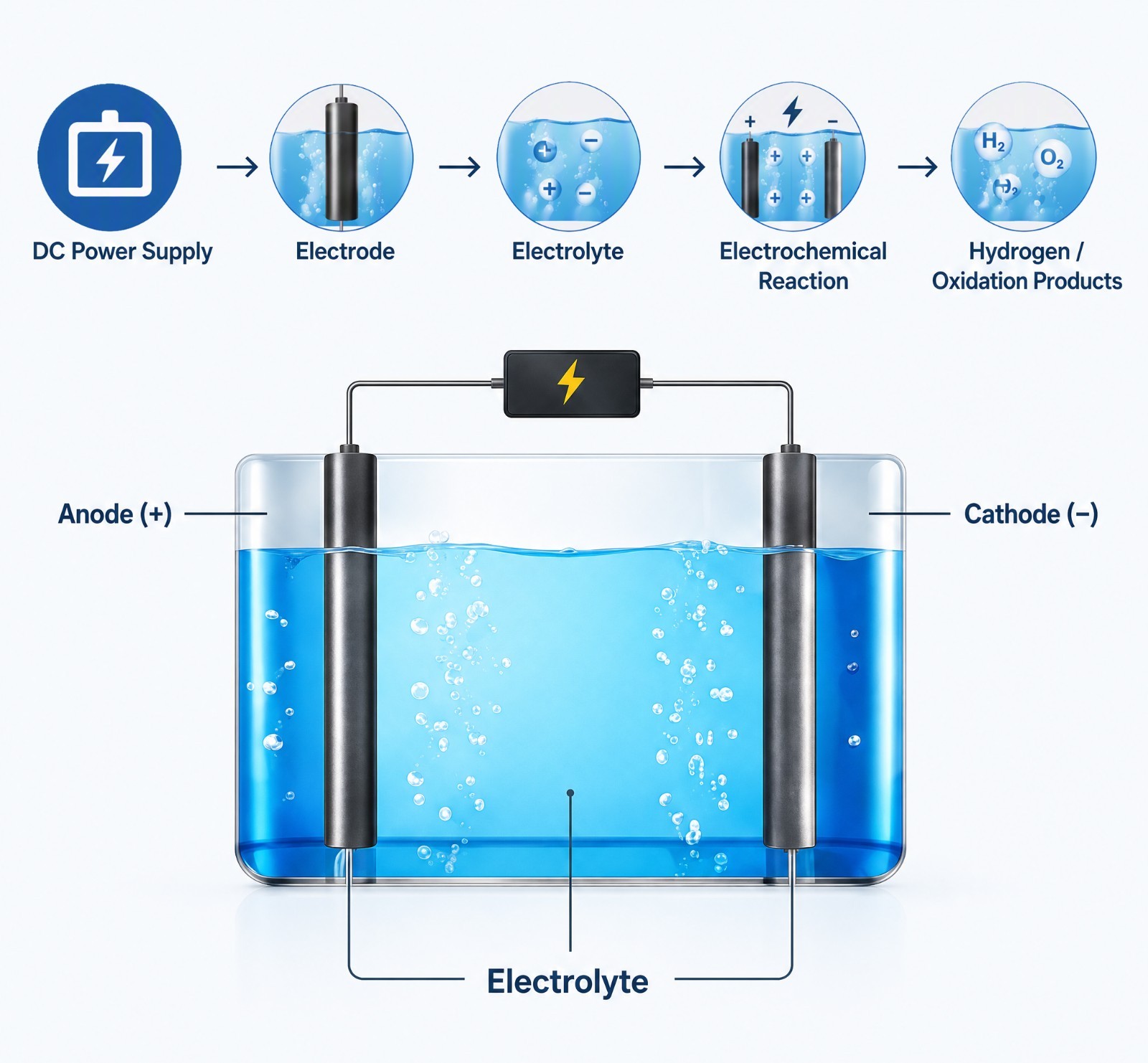
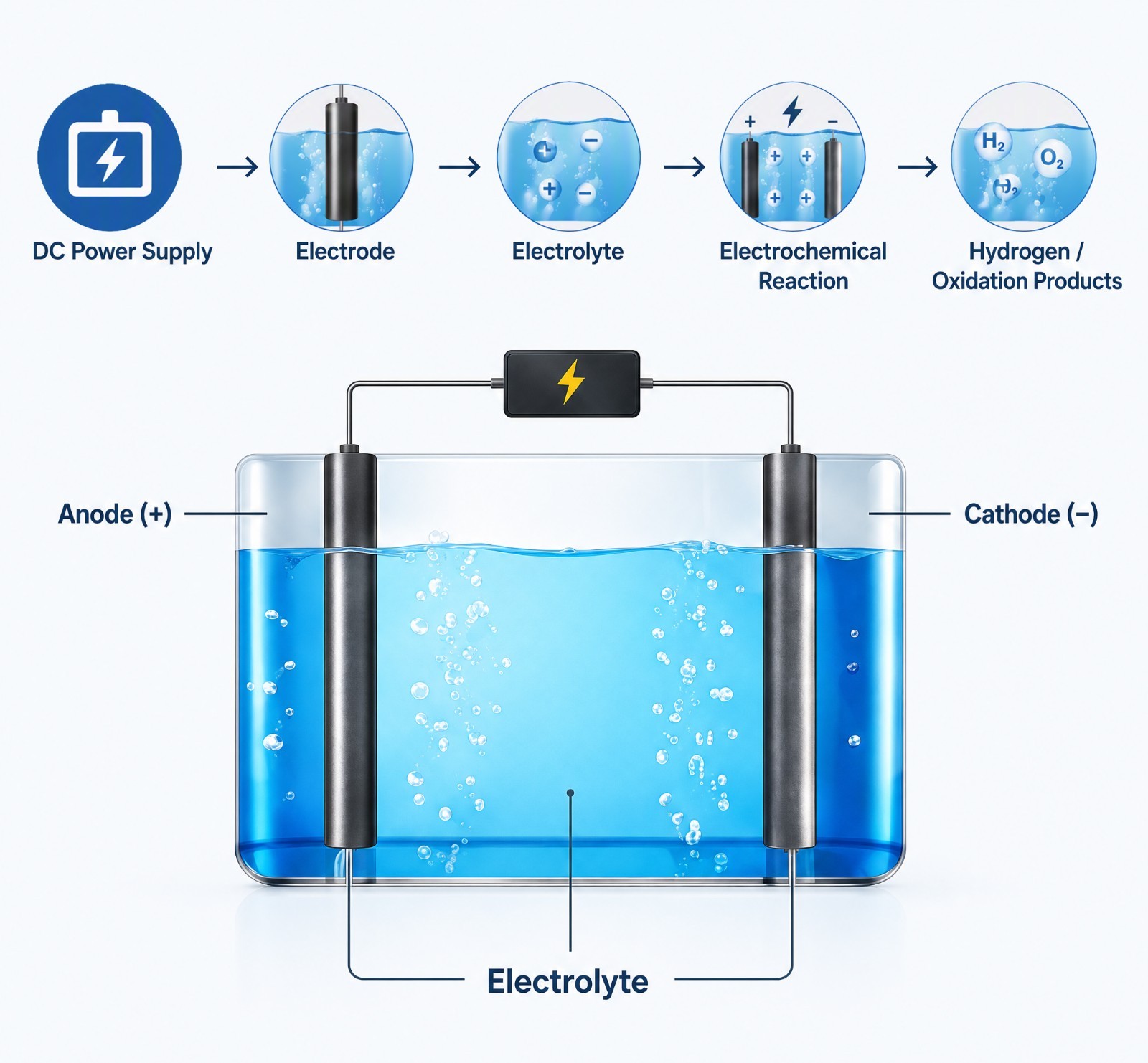
During electrolysis, electrical energy drives electrochemical reactions at the electrode surface. The platinum-coated titanium anode provides the active electrode surface, while the titanium substrate provides the required structural support.
The titanium core is light, mechanically strong and highly corrosion-resistant, so the anode holds its shape and conductivity under continuous current and aggressive electrolyte conditions. The platinum coating supplies the electrocatalytic activity: it lowers the overpotential for oxygen and chlorine evolution, allowing the cell to reach the required reaction rate at a lower voltage — which means less energy consumed per unit of output. Because platinum remains stable at high current density and resists oxidation, the coating also protects the titanium beneath it from passivation and keeps performance consistent over a long service life.
Together, the two materials deliver an anode that is efficient, durable and economical. Typical applications include hydrogen production by water electrolysis, Brown's Gas (HHO) generators, alkaline and acidic water ionizers, hydrogen-rich water bottles and hydrogen water machines, hypochlorous acid generators for fruit-and-vegetable disinfection, skin care and antioxidant water devices, and precision electroplating and laboratory electrochemical research.
Designed for Water Electrolysis, Hydrogen Generation and Customized Electrochemical Equipment
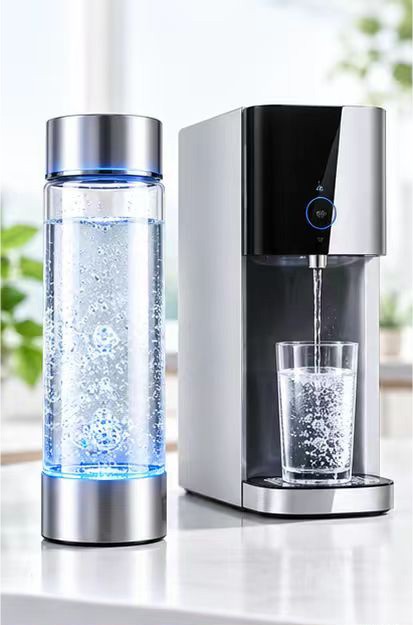
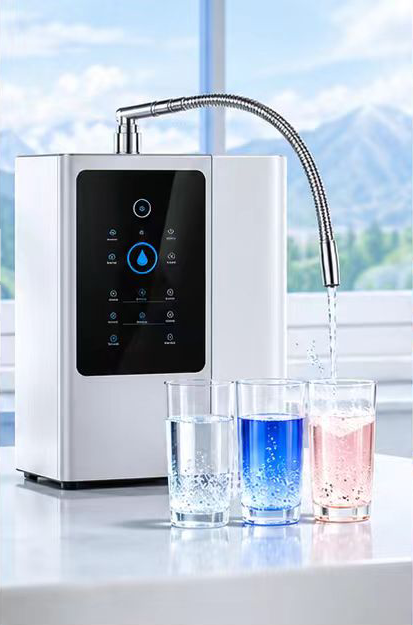
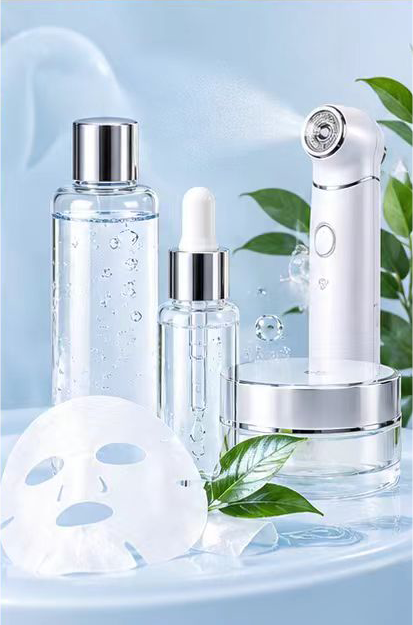
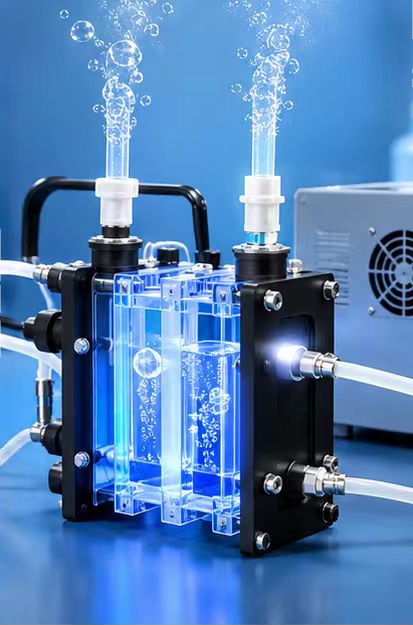
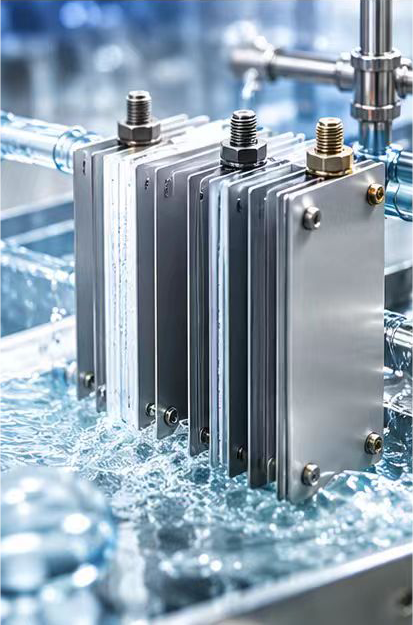
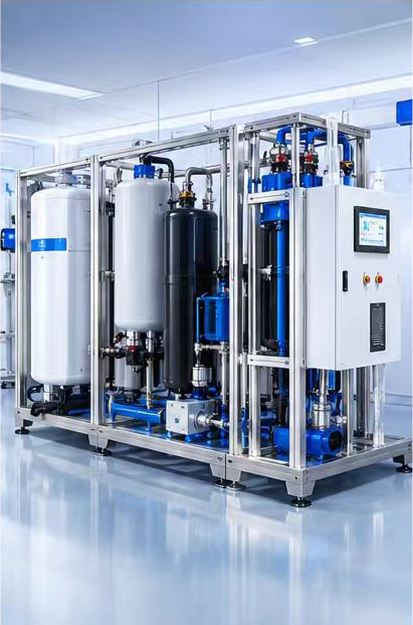
A factory-direct manufacturer of electrocatalytic titanium electrodes — built to your drawing, your cell and your duty cycle.
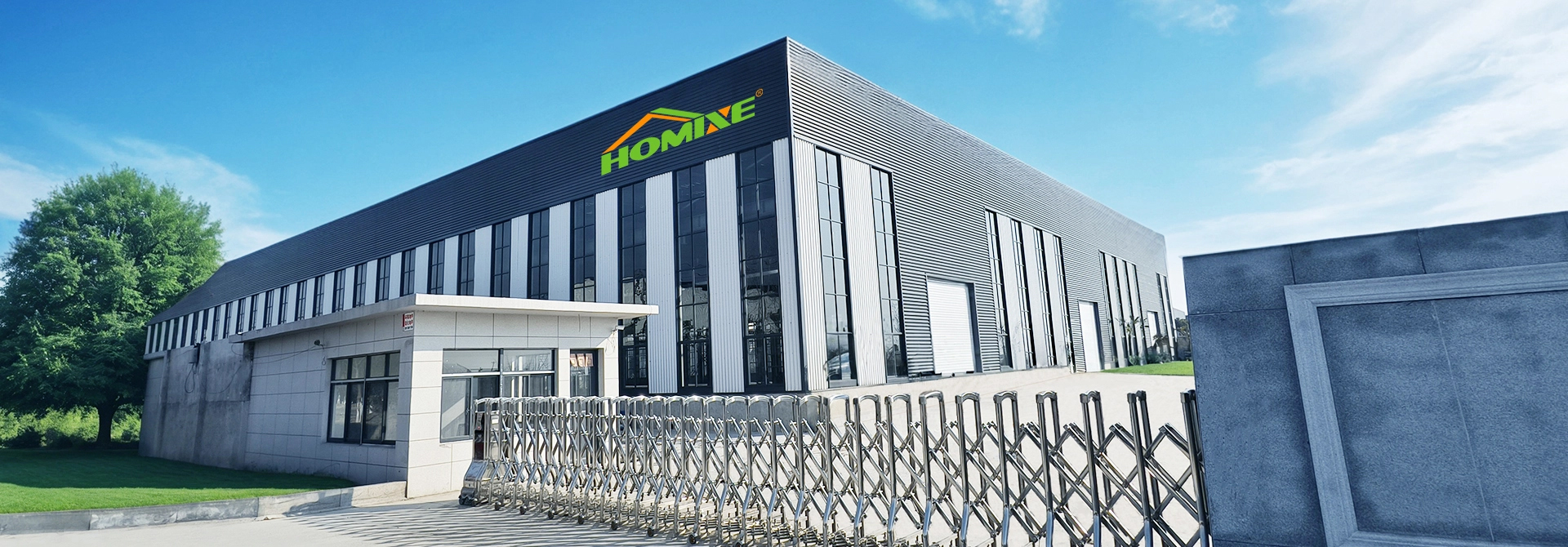
Because we make the electrode ourselves — we do not simply resell it. HOMIXE has focused on electrocatalytic titanium electrodes since 2013, producing platinized anodes, MMO anodes and complete electrochemical cells in our own workshop in Foshan, China. Buying factory-direct means no middleman markup, engineering support on your specification before production starts, and full control over coating thickness, adhesion and batch quality. Every order ships traceable to its inspection records — from a 5-piece sample to OEM production.



 EN
EN